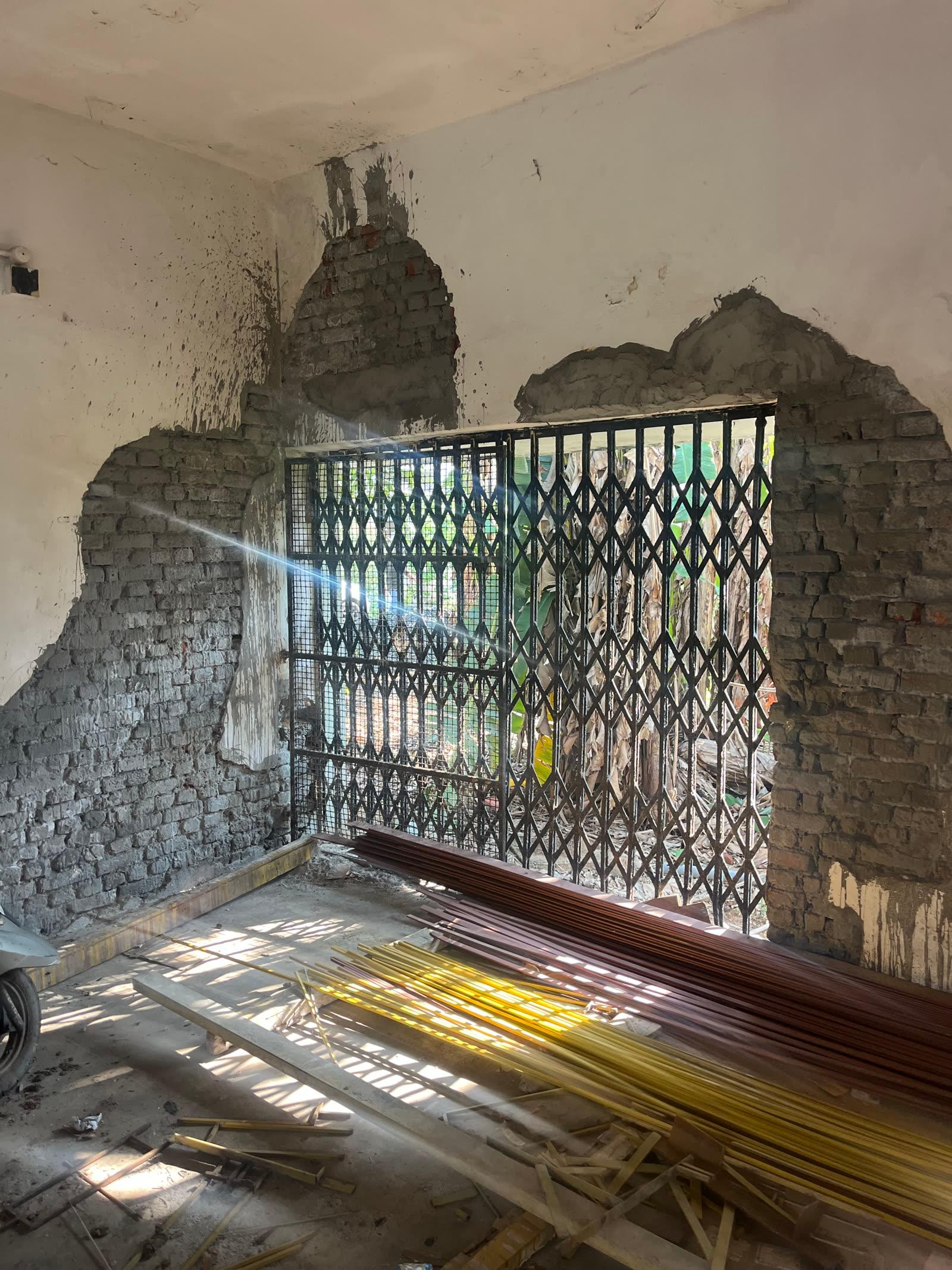
Almost every house develops cracks sooner or later. Most of them are only in the plaster and mean nothing. A few are the building telling you something is wrong. The trick is knowing which is which — before a small repair turns into a large one.
Cracks that are usually harmless
- Fine hairline cracks in fresh plaster, often in a random or map-like pattern — the plaster shrinks as it dries, especially if it was not cured properly[1]
- Thin cracks where a wall meets a column or beam — brick and concrete expand and shrink differently with heat and moisture
- A hairline crack along the joint between an old wall and a new extension
- Cracks that appeared once and have not grown over several months
These are cosmetic. Fill them with a flexible filler before repainting, and keep an eye on them.
Cracks that need an engineer
- Diagonal cracks running from the corners of doors and windows
- Stepped cracks that follow the mortar joints of a brick or block wall[2]
- Cracks that are wider at one end than the other, or that keep getting longer or wider
- Cracks that go right through the wall — visible on both sides — or through the brickwork, not just the plaster
- Any crack in a beam, column or the underside of a slab, especially with brown rust stains
- Doors and windows that suddenly start sticking, or floors that slope
These point to movement in the structure — uneven settlement of the foundation, overloading, or corroding reinforcement — and they rarely fix themselves.
Rust stains are a red flag
In wet, humid and coastal climates, the most common serious problem we see is corrosion of the steel inside the concrete. Water reaches the bars through thin or porous cover, the steel rusts, rust takes up more space than steel, and it pushes the concrete off. You see it first as brown stains and fine cracks along the line of the bars, then as chunks of concrete falling off sunshades, beams and slab soffits. Caught early, it can be repaired. Left alone, it steadily eats away the strength of the member.
How to watch a crack
Draw a pencil line across each end of the crack and write the date next to it. Photograph it with a coin or ruler beside it for scale. Check again every month. If the crack grows past your marks or gets wider, it is moving — and a moving crack needs an engineer.
What a structural engineer will do
A proper assessment starts with a visual survey and crack mapping, then non-destructive tests such as the rebound hammer and ultrasonic pulse velocity to judge the concrete[3],[4], and cover-meter readings to find the steel. Where needed, a few concrete cores are taken. The result tells you whether the building needs simple repairs, strengthening such as column or beam jacketing[5], or nothing more than paint.
If you are not sure about a crack, send us clear photos on WhatsApp — it costs nothing to ask, and it is far cheaper to check early than to repair late.
Sources
- [1]HouseYog — Top causes of wall cracks and how to fix them
- [2]Designing Buildings Wiki — Cracking and building movement
- [3]IS 13311 (Part 2):1992 — NDT of Concrete: Rebound Hammer (BIS)
- [4]IS 13311 (Part 1):1992 — NDT of Concrete: Ultrasonic Pulse Velocity (BIS)
- [5]IS 15988:2013 — Seismic Evaluation and Strengthening of Existing RC Buildings (BIS)
Indian Standards are published by the Bureau of Indian Standards; links point to public copies. Always design to the current edition.
This article is general information, not engineering advice for your building. Always have a qualified structural engineer check your structure. Read our disclaimer.
Learn this hands-on, or let us do it for you.